
The Grass Foundation Trustees have selected three recipients for the 2026 Henry Grass Rising Stars in Neuroscience Award: Daniel Cardozo Pinto, Maribel Patiño, and Whitney Stevens-Sostre.
Dr. Daniel Cardozo Pinto is a Junior Fellow in the Society of Fellows at Harvard University. In Naoshige Uchida’s lab in the Department of Molecular and Cell Biology,

The 75th cohort of Grass Fellows arrived in Woods Hole to begin their residency in the Grass Laboratory. Since 1951, the Grass Fellowship Program has brought early-career investigators to the Grass Laboratory at the Marine Biological Laboratory (MBL) for 14 weeks to pursue a self-designed, independent research project in neuroscience.

The Grass Foundation is pleased to announce the 2026 Grass Fellows. This year’s cohort marks the 75th anniversary of the Grass Fellowship Program. Since 1951, the Grass Fellowship has brought early-career investigators to the MBL for 14 weeks to pursue a self-designed, independent research project in neuroscience. The Grass Foundation selects and provides full support for the fellows,

Established in 2021 in honor of Dr. Henry Grass, a Grass Foundation Trustee and ardent supporter of neuroscience and education,
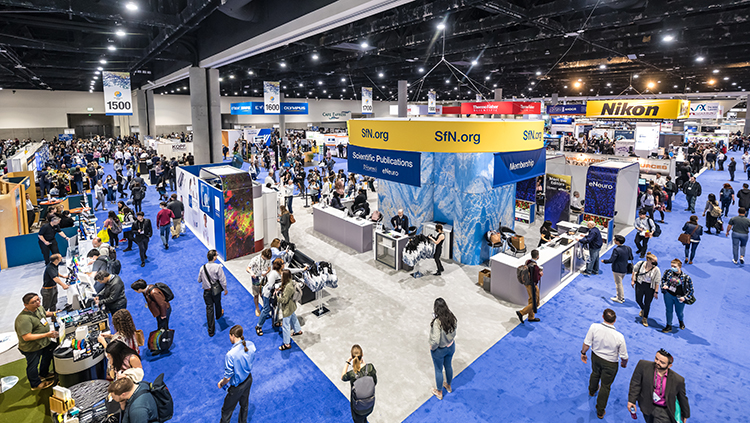
For those traveling to the 2025 Society for Neuroscience Annual Meeting in San Diego, California, you can catch up with Grass Fellows and their recent work. Below is a working list of sessions featuring Grass Fellows and activities supported by The Grass Foundation. To request an addition to this list please email info@grassfoundation.org.
The Grass Foundation is now accepting applications for the 2026 Grass Fellowship at the Marine Biological Laboratory in Woods Hole, Massachusetts.
For this application year, the Foundation is piloting a new application process with a priority deadline and a final deadline.

The Grass Foundation Trustees have selected the recipients of the 2025 Henry Grass Rising Stars in Neuroscience Award: Christian Cazares, Ph.D., and Eddy Albarran, Ph.D.
Cazares is currently a postdoctoral researcher at the University of California, San Diego, working in the lab of Professor Bradley Voytek,

Birds and humans share an ability that’s not too common among our tetrapod vertebrate cousins–walking on two feet. While some animals can manage on their hindlimbs for a limited time (think prairie dogs, gorillas, and running frilled lizards), true bipedalism is only found among humans, birds, and a few other animals like kangaroos.

With its suction-cup-like mouth, rings of sharp teeth, and toothed tongue, lampreys attach themselves to fish and feast on their blood and other bodily fluids, sometimes killing them in the process. It’s a strategy that has served them well, as they have remained relatively unchanged for over 300 million years.
These eight early-career scientists will soon be in the Grass Lab at the Marine Biological Laboratory in Woods Hole, Massachusetts, to spend the summer conducting research on topics ranging from pain sensation in sharks to ocean acidification and behavior in sea slugs.
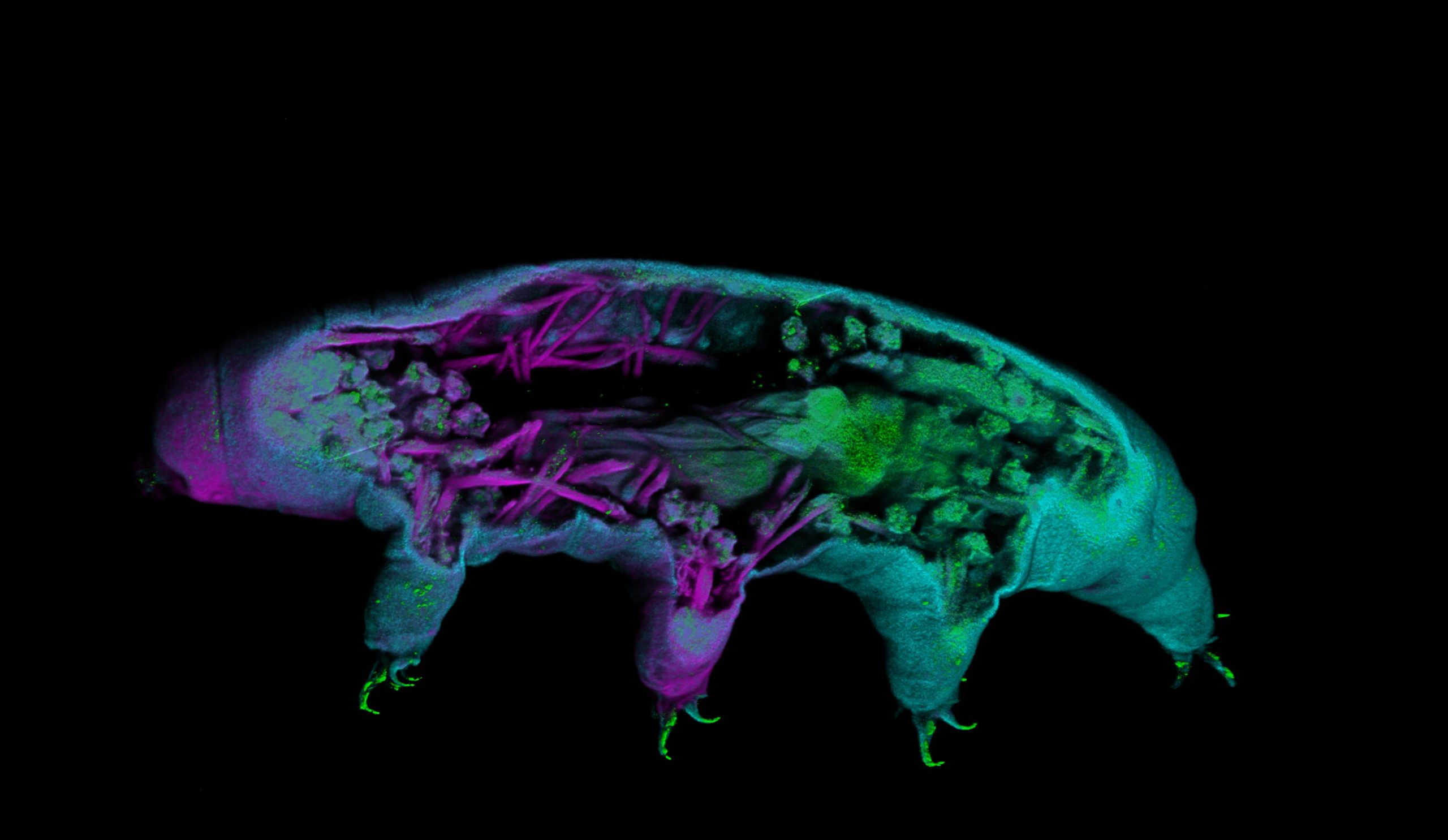
If there was an official fan club for tardigrades, also known as water bears, its president would be Ana Lyons, Ph.D. She first learned about these charismatic microscopic animals on a trip to the library as a teenager, and she’s been a lifelong enthusiast of these creatures that are found in nearly every ecosystem imaginable.

There are over 7,000 described species of frogs, and they live in a wide variety of habitats. Some spend nearly their entire lives in the trees, and among those tree frogs, a few have evolved specialized features for gliding or parachuting between branches.
For scientists like 2024 Grass Fellow Andrea “Dre” Gaede,

We may call them “crabs,” but horseshoe crabs are more closely related to spiders and scorpions than to the crustaceans they share their coastal homes with. The four species in existence today can be found along the east coasts of North America and South Asia, descendants of creatures found in the fossil record as far back as 445 million years.
News from Grass fellow Kei Jokura (Grass lab 2024)
when-two-sea-aliens-become-one-new-york-times
And from Amy Herbert (Grass lab 2018)
science/sea-robins-legs-tasting-fish
You can see some recent tweets here: https://twitter.com/grassfoundation
The traditional 4th of July parade in Woods Hole was an amazing success with the Grass Fellows hosting a squid and nautilus.
Starting in 2019, Mellisa Coleman will serve as Director of the Grass Laboratory and Christophe Dupre will serve as Associate Director. Melissa is Professor at Claremont McKenna College, was a Grass Fellow in 1996 and has served as a Trustee of the Foundation since 2016. She will follow in the footsteps of Dr.
As of January 1, 2018 the Grass Foundation has a new President! Catherine Carr takes over the position from Felix Schweizer who will be helping Carr with the transition. You can read more details here: presidents-welcome
On December 18, 2017 we lost Ricardo Miledi, a dear friend of the Grass Foundation, an outstanding researcher and scholar , a wonderful human being, a fantastic mentor. He will be dearly missed!
To cite FALAN: “… un maestro de las neurociencias, un latinoamericano que supo conquistar un lugar renombrado entre sus pares.
The Grass Foundation supported Ricardo Arenada and Rhonda Dzakpasu to teach local high school teachers. Click image.
Every year, the American Epilespy Society gives Travel Fellowships for attendance at the yearly AES meeting. The 2017 Fellows have been announced.
This is a soft launch of our new website, meaning that we are trying it out for functionality. We know that many entries, especially concerning former fellows, trustees and Forbes Lecturers are still missing. At this point we are not asking for corrections, except if you should have pictures that are missing.